
craft
Indigo and Morinda in an East Sumba Dye Yard
Kaliuda, East Sumba 4 hours 12+
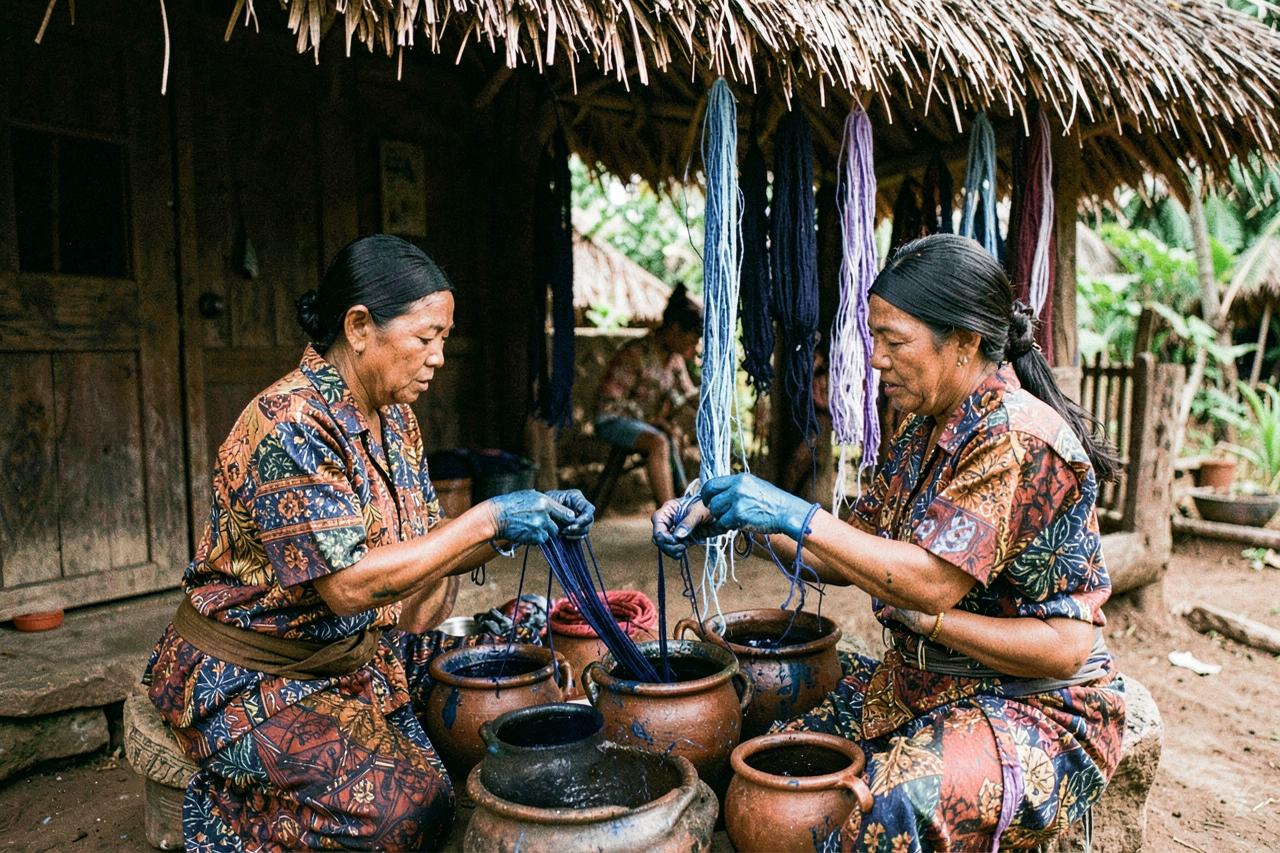
Rambu Kahi's colours grow behind her house. You bind, dip and see why one hinggi can take a family a year.
Kaliuda's households still dye with fermented indigo and morinda root, a process measured in weeks of dipping rather than hours. You help bind a resist pattern, dip in the indigo pot, and hear how the cloth is read: which motifs belong to which clan, and which are made only for burial.
The story behind the experience
Colour as calendar
Indigo is worked in the wet months and morinda red in the dry, so a single cloth crosses seasons. That is the real reason it cannot be made faster.
How this scores
Cultural respect
Guided participation
Dress code: Modest; clothes you do not mind staining
What to bring
- · Cash to buy directly from the household
- · Water
- · Sun protection
What not to do
- · Ask to buy a burial cloth
- · Photograph a household's motifs for reproduction
- · Bargain on a piece that took a year
Your host
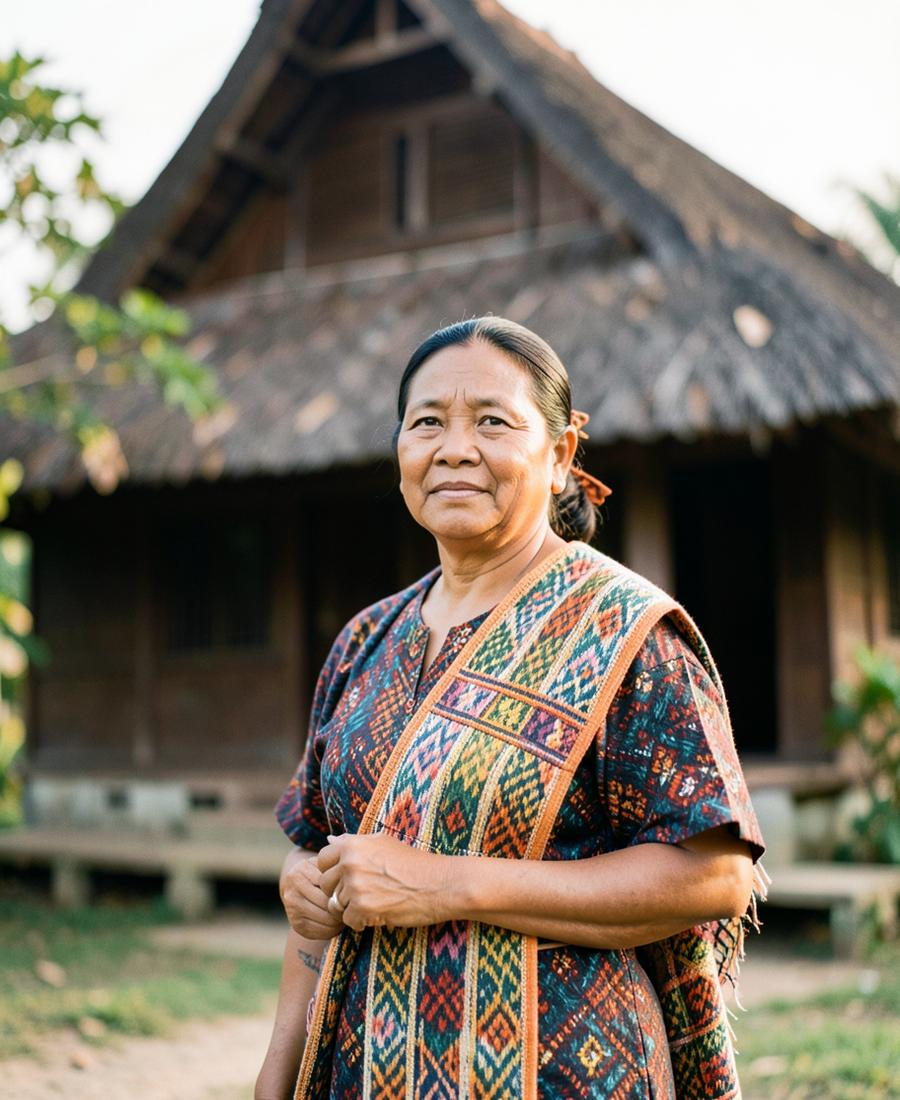
Meet Rambu Kahi
Ikat dyer, East Sumba · Kaliuda, East Sumba
Rambu Kahi keeps indigo, morinda root and kombu bark growing behind the house because the colours cannot be bought. A single hinggi can take her family a year, and she prices it as a year of work.