heritage
Subak Morning in Jatiluwih
Jatiluwih, Tabanan
89
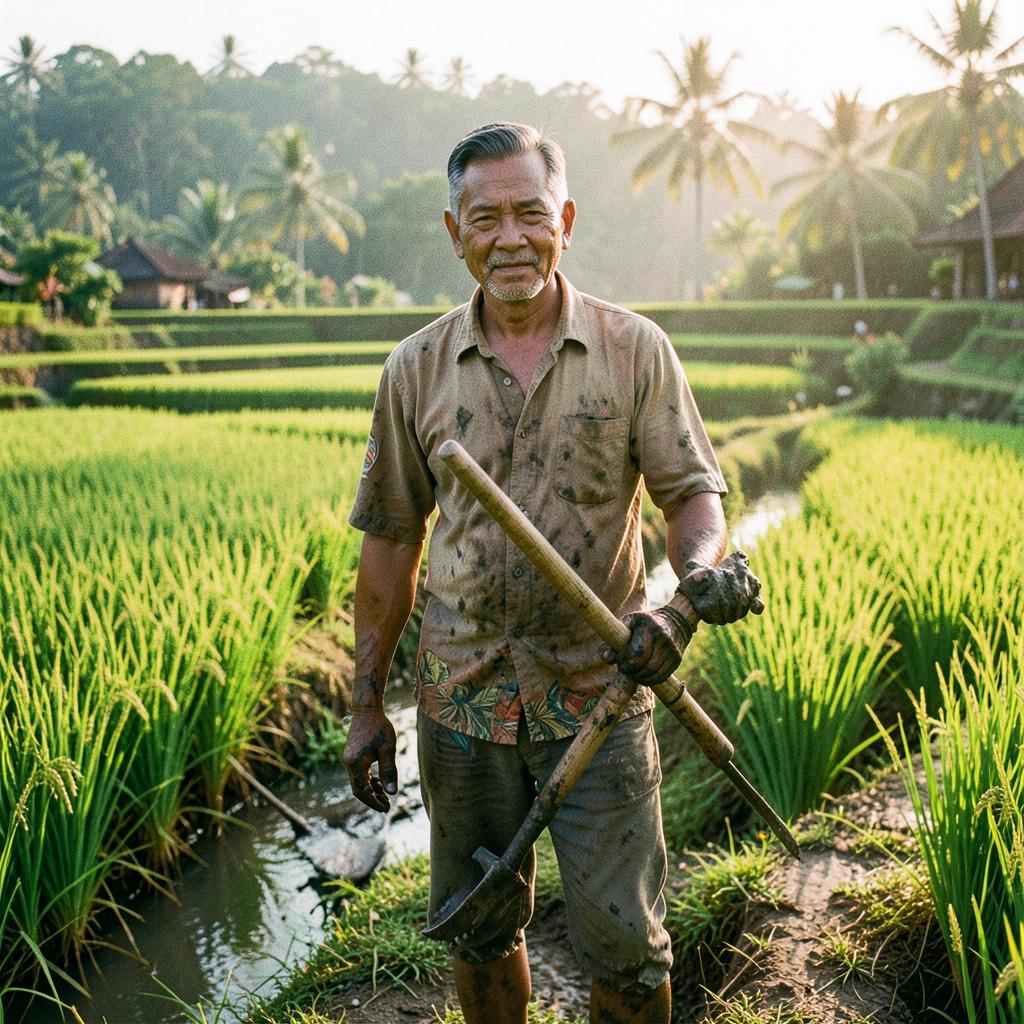
Walk the water with Gede at 6am — the gates, the shares, the shrines — through terraces farmed by the same subak for a thousand years.
Mixed 3h
from Rp 450.000Discover experience

farming · heritage · ecotourism
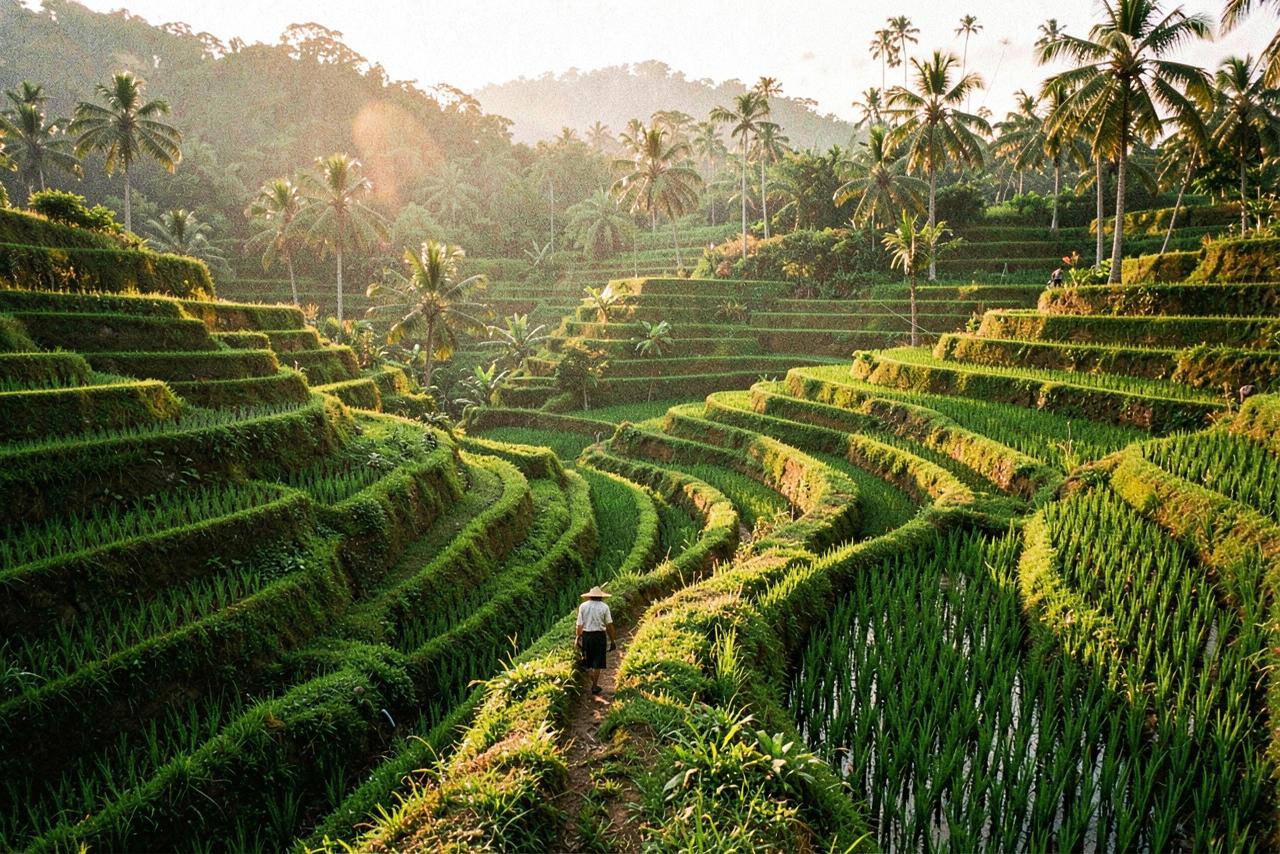
The terraces are famous; the reason they exist is not. Jatiluwih's water is divided by a system of notched gates and monthly assemblies, with the water temple as the arbiter. Farmers here grow red rice that takes longer and yields less than modern hybrids, and they keep growing it.
Subak is simultaneously an irrigation system, a religious institution and a legal one. Every water division has a shrine attached.
Farming families organised into subak groups, each with elected water leaders.
Jatiluwih red rice, lawar for ceremonies, coffee grown on the upper slopes.
Farm tools, woven rice-carrying baskets.
Terraces from 700 metres up towards Batukaru's cloud forest, with rich birdlife.
Jatiluwih, Tabanan
Walk the water with Gede at 6am — the gates, the shares, the shrines — through terraces farmed by the same subak for a thousand years.
Jatiluwih, Tabanan
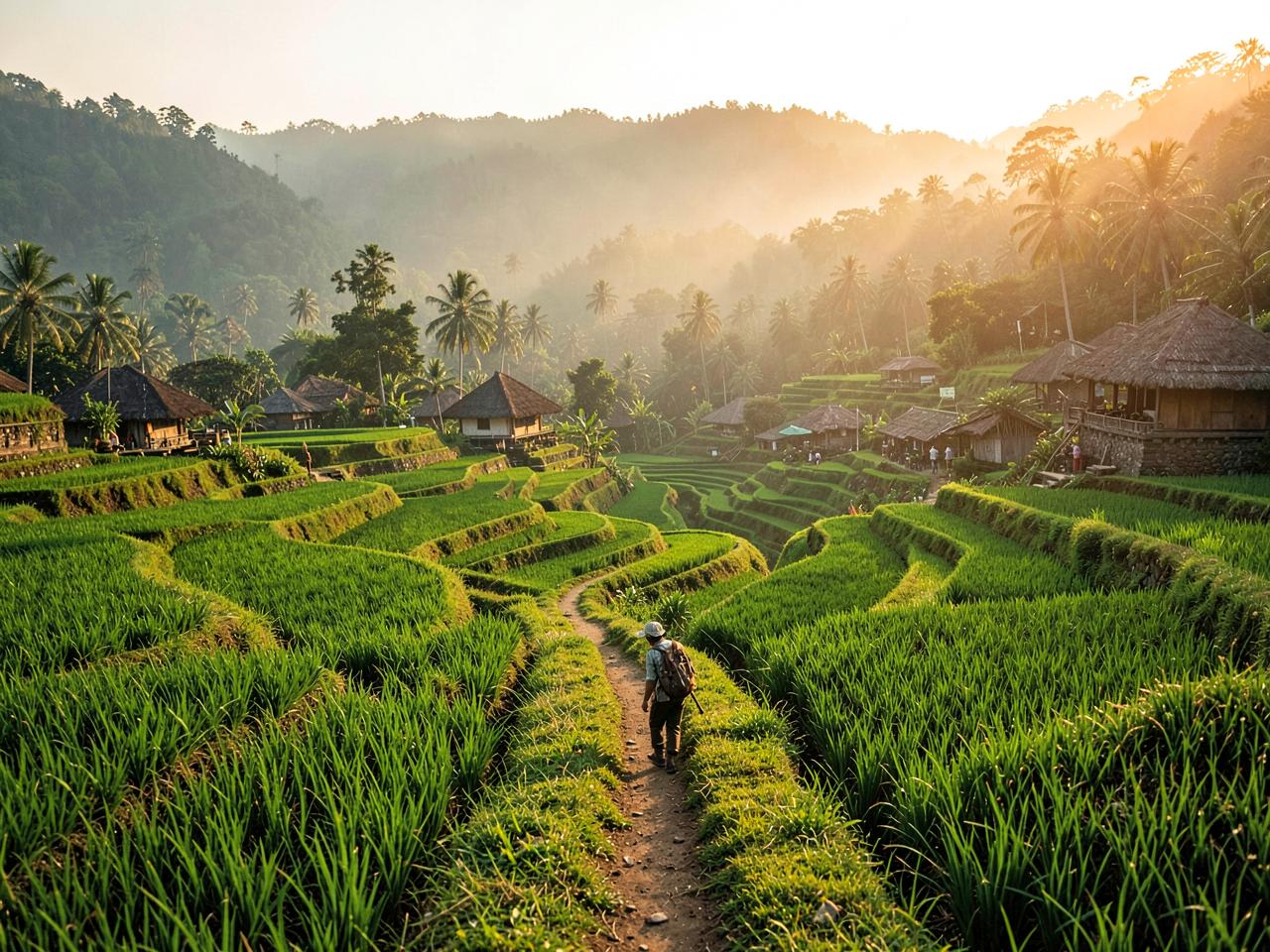
Cut, thresh and winnow red rice beside Gede's family, then eat it the same day in their compound kitchen.