
local life
Black-Sand Salt Farming in Amed
Amed, Karangasem 2 hours 10+
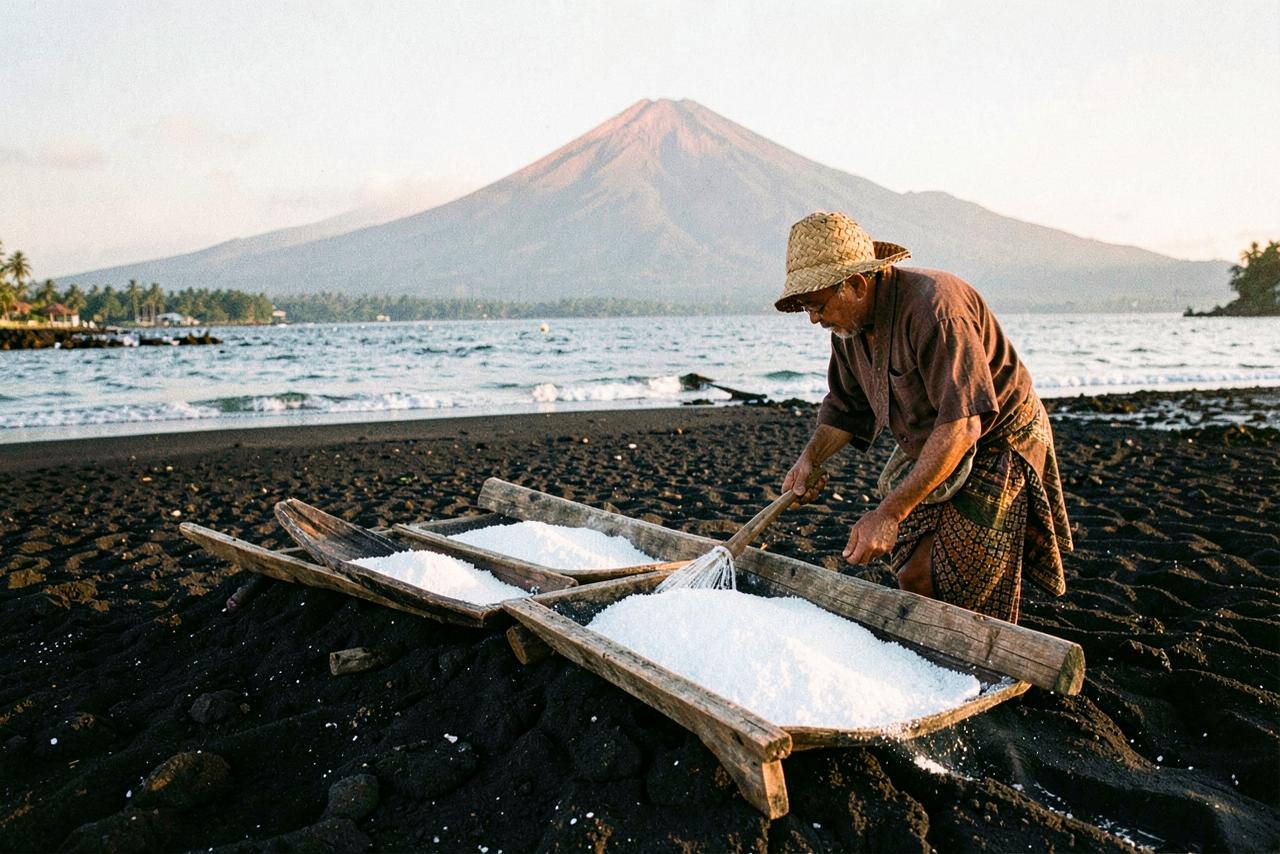
Carry seawater, rake black sand and press brine through palm troughs with Komang, one of the last salt families in Amed.
Amed salt is made by soaking black volcanic sand in seawater, drying it in the sun, then filtering the brine through hollowed palm trunks and evaporating it in wooden troughs. It is heavy, hot, unglamorous work and there are fewer families doing it every year. You do the work, then taste the difference against factory salt.
The story behind the experience
A trade with a closing window
Amed's salt farmers earn more from a single day of tourism than a week of salt, which is exactly why some families now do both — the visits keep the troughs in use.
How this scores
Cultural respect
Visitor-friendly
What to bring
- · Hat
- · Sunscreen
- · Sandals you can rinse
What not to do
- · Walk on drying beds
- · Haggle over the salt price
Your host
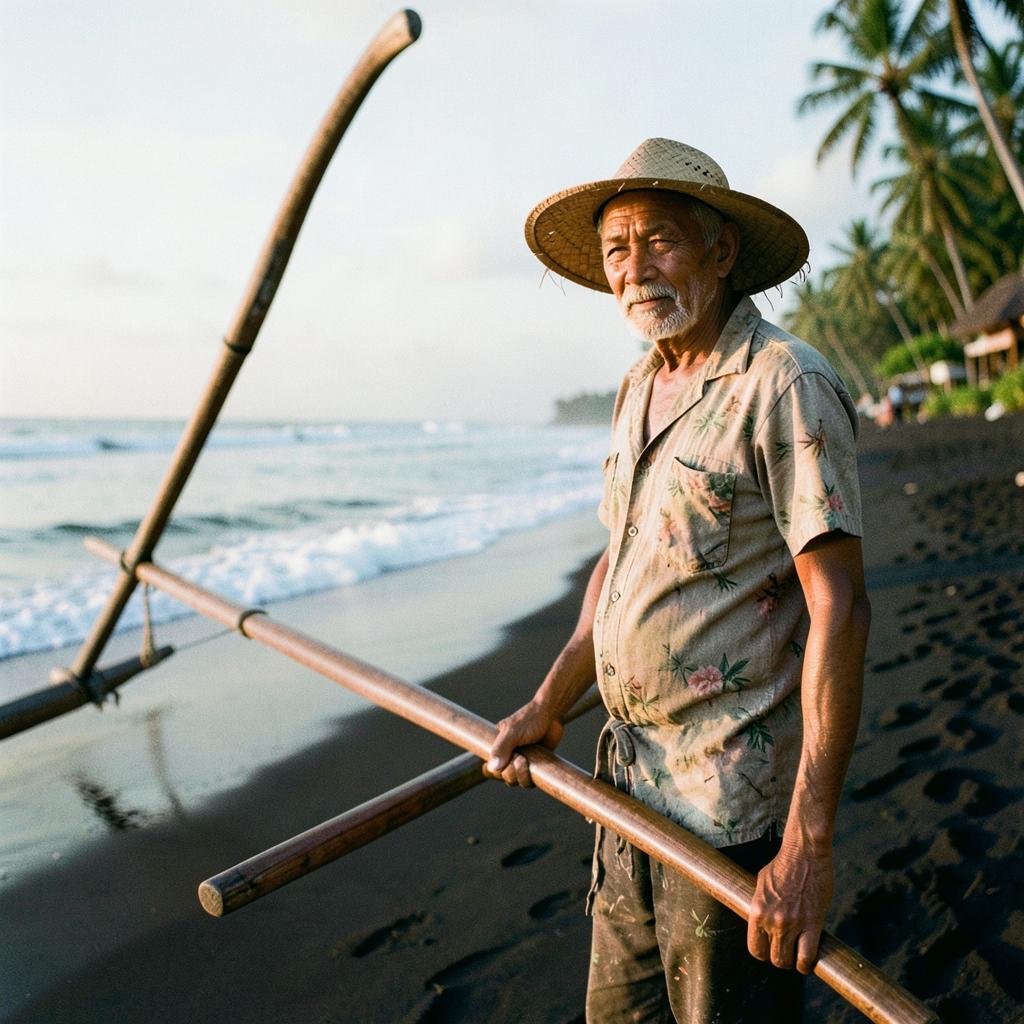
Meet Komang
Fisherman and salt farmer · Jemeluk, Amed
Komang fishes at dawn and works the salt troughs in the afternoon, as his father did. He is blunt about what tourism changed in Amed: more money, less time at sea, and a generation that may not learn either trade.